Garage Door Spring Replacement: What Every Homeowner Should Know
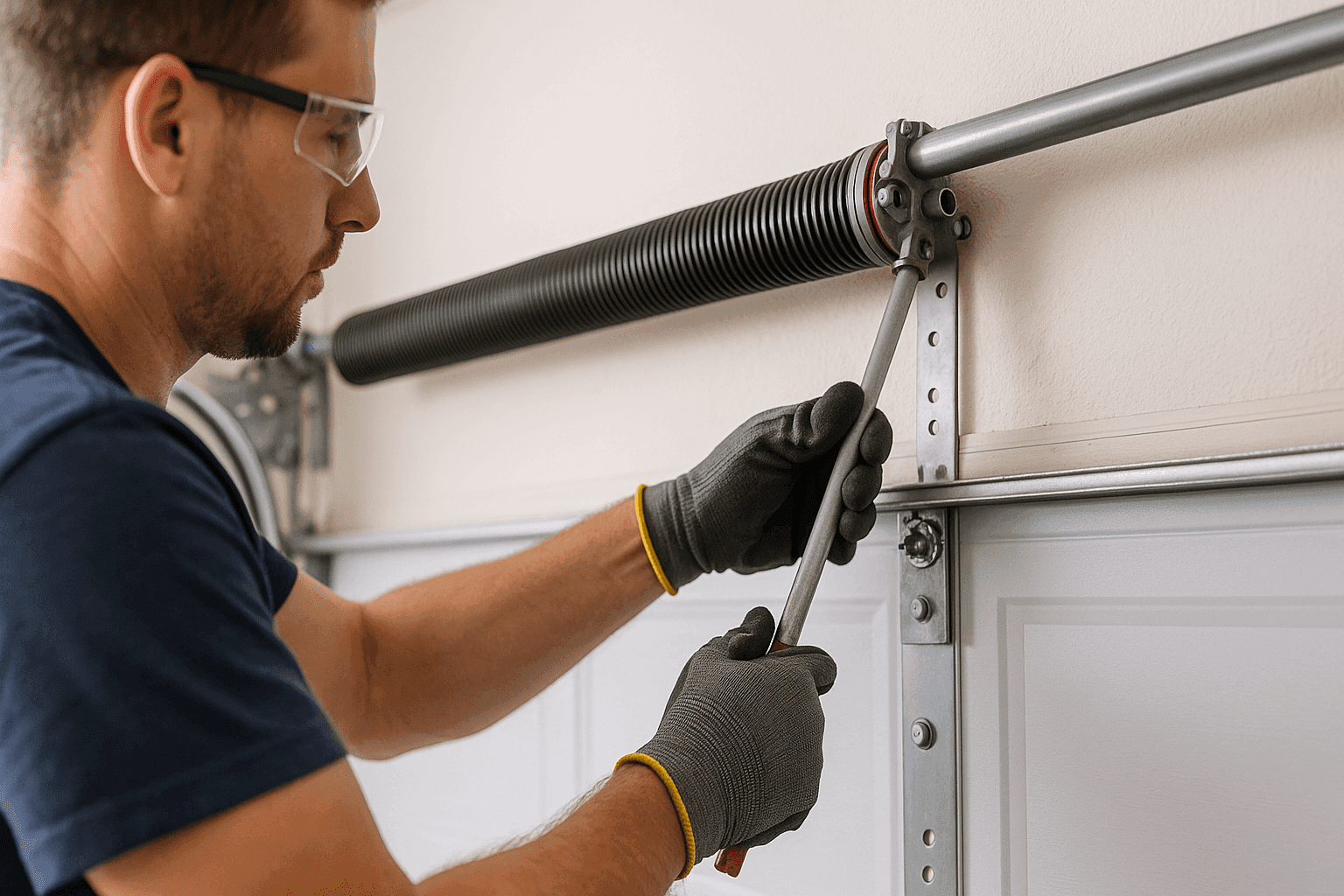
When your garage door hesitates, groans, or slams shut, it’s not just a nuisance—it’s a warning. The springs that lift your garage door work silently, tirelessly. But when they fail, everything stops.
At Apex Garage Door Services, we’ve seen what happens when homeowners ignore those early signs. Whether you’re safeguarding your home or a busy business, understanding garage door springs is your first defense against inconvenience, property damage, or even serious injury.
What Garage Door Springs Do—and Why They Matter
Every time your garage door rises or falls, powerful springs do the heavy lifting. Think of them as the “muscles” of your garage_door system. Without them, even the strongest opener would stall.
There are two main types:
- Torsion springs: Mounted above the door, twisting to store and release energy. Common in modern garage_doors.
- Extension springs: Stretch along the tracks on each side, expanding and contracting with each movement. More common in older or lighter doors.
Both styles are under extreme tension. That tension makes daily use possible—but it also means trouble if a spring snaps.
Signs Your Garage Door Springs Are Failing 🛑
Ignoring early warnings can lead to disaster. Watch for:
- A loud bang from the garage—like a firecracker. That’s often a spring breaking.
- Door feels heavy or won’t stay open. Springs aren’t pulling their weight.
- Uneven movement—the door jerks or gets stuck halfway.
- Gaps in the spring coils or visible rust.
- Cables look loose or hang strangely.
If any of these sound familiar, it’s time for a professional inspection.
Quick Safety Checklist: What Not to Touch
- Never try to wind or unwind a spring yourself.
- Keep children and pets clear of the garage door area if you suspect a problem.
- Don’t operate a door with a broken spring—this strains the opener, tracks, and panels.
- Unplug automatic openers until repairs are complete.
- If you notice frayed cables or bent tracks, avoid using the door at all.
According to the International Door Association (IDA), improper handling of springs is a leading cause of garage door injuries.
The Safety Risks of DIY Spring Work
Replacing a garage door spring isn’t like swapping out a light bulb. These springs store enough energy to lift a 200-pound door with ease. If one snaps—or if your wrench slips—the resulting force can cause broken bones or worse.
Some online tutorials make spring replacement look easy. In reality, even experienced DIYers risk serious injury. The Consumer Product Safety Commission (CPSC) warns that garage door springs are among the most dangerous household repairs.
Remember: Safety Sensor Installation near you keeps your system secure, but it can’t protect you if you try to fix a spring yourself.
How Professionals Safely Replace Springs
So, what do the pros at Apex Garage Door Services do differently?
- Inspection: We assess the full system—springs, cables, tracks, rollers, and opener.
- Proper tools: Specialized winding bars, clamps, and safety gear ensure precision control.
- Secure setup: The door is clamped to prevent accidental movement.
- Careful unwinding: Tension is released in a controlled fashion, one turn at a time.
- Spring matching: New springs are calibrated for your door’s exact weight and type.
- Testing: After installation, we balance the door, test safety sensors, and check opener force.
- Final check: We inspect weather seals, hinges, and remotes for any signs of wear.
This process isn’t just about fixing a problem—it’s about preventing the next one.
Average Replacement Costs and Lifespan
How much will you spend on spring replacement? Several factors affect cost:
- Type of spring (torsion vs. extension)
- Number of springs
- Door size and weight
- Labor rates in your area
For most residential garage_doors, you can expect a range from $150 to $400 per spring, including parts and labor. Commercial doors or specialty installations (like insulated garage doors or custom garage doors) may cost more.
Lifespan: Most springs last between 7–12 years, or about 10,000 cycles (one open and close = one cycle). If you use your garage as your front door, you’ll hit that limit sooner.
Regular maintenance can extend spring life and spot issues before they turn into emergencies.
Emergency Protocol: What To Do If a Spring Breaks Suddenly
It happens in a flash. One minute, your garage door works fine. The next, it’s stuck—or worse, slamming shut.
Here’s what to do:
- Stop using the door immediately. Don’t force it open or closed.
- Unplug the opener if it’s safe to do so.
- Keep people and pets away from the door and tracks.
- Call Apex Garage Door Services for emergency garage door services—especially if the door is stuck open and exposes your property.
If your car is trapped, don’t try to lift the door yourself. Residential and commercial doors are heavier than they look, and without springs, it’s a two-person job at minimum—and still risky.
Prevention & Maintenance: Keeping Springs (and You) Safe
A little attention goes a long way:
- Visual inspections: Check springs, cables, and rollers every few months for rust, gaps, or fraying.
- Test door balance: Disconnect the opener and lift the door halfway. If it sags or shoots up, call a pro.
- Lubricate moving parts: Use garage-door-specific lubricant on springs, rollers, and hinges.
- Schedule annual tune-ups: Professional inspections catch small issues before they turn big. Especially important for commercial garage doors and high-traffic homes.
Refer to the Door & Access Systems Manufacturers Association (DASMA) guidelines for best practices on maintenance.
Q&A: Common Garage Door Spring Myths
Q: “If one spring breaks, I only need to replace that one, right?”
A: Not always. If your system uses two springs, they’re likely the same age. Replacing both helps prevent a second failure soon after—and keeps the door balanced.
Q: “Can I just buy a universal spring online?”
A: Garage_doors come in many weights and sizes. Springs must be matched precisely. The wrong spring can damage your opener or even cause the door to fall.
Q: “My opener works, so the springs must be fine?”
A: Not necessarily. Openers can sometimes compensate for weak springs, but this puts strain on the motor and other parts, leading to bigger (and costlier) problems down the road.
Q: “Springs last forever if I don’t use the door much.”
A: Springs weaken over time, not just with use. Humidity, rust, or temperature swings can all shorten lifespan.
Local and Seasonal Considerations
Even though our advice is location-agnostic, climate matters. In areas with harsh winters, springs are more prone to snapping due to metal fatigue. Humid climates? Watch for rust.
Commercial garage doors and roll-up garage doors face added wear from frequent cycles and heavy loads. Schedule inspections more often if your door sees daily use.
The Takeaway: Act Early, Stay Safe
A failing garage door spring is more than an inconvenience. It’s a safety risk, a security concern, and a disruption to your daily life or business. Don’t wait for disaster.
Whether you need routine maintenance, spring replacement, or emergency garage door services, Apex Garage Door Services is ready to help with professional, safety-focused solutions.
Call Apex Garage Door Services now — or reach us anytime at 888-864-9691 .